
Rodent Droppings in a Hoarded House: How to Handle Them Safely
Last updated: October 14, 2026
Rodent droppings in a hoarded house have to be wetted with disinfectant and picked up, never swept or vacuumed, because dried droppings and urine can carry hantavirus. The California Department of Public Health reports about 3 Sin Nombre hantavirus infections a year in the state, carried by the deer mouse and caught by breathing contaminated dust. Here's the safe order of work.
The Short Answer
Air the space out for 30 minutes, wear rubber or plastic gloves, soak droppings and nests with 1 part bleach to 9 parts water for 5 minutes, then wipe them up with paper towels and bag them. Those are the CDC's steps for a spot of droppings. A hoarded house with droppings through the piles needs a crew, because every box and bag moved stirs up more.
Why Droppings Are Dangerous in a Hoard
Droppings in a hoard are dangerous because they're everywhere the mice have been, and the piles hide them. The California Department of Public Health says people catch hantavirus by breathing air contaminated when dried urine, saliva, or droppings get stirred up, especially while opening or cleaning closed spaces with rodents. A hoarded house is a closed space full of rodent cover, and clearing it means moving the very material the mice nested in.
The CDC's Steps for Cleaning Up After Rodents
The CDC's steps for cleaning up after rodents work in a fixed order.
- Open doors and windows for 30 minutes before cleaning, and leave the area while it airs out.
- Wear rubber or plastic gloves.
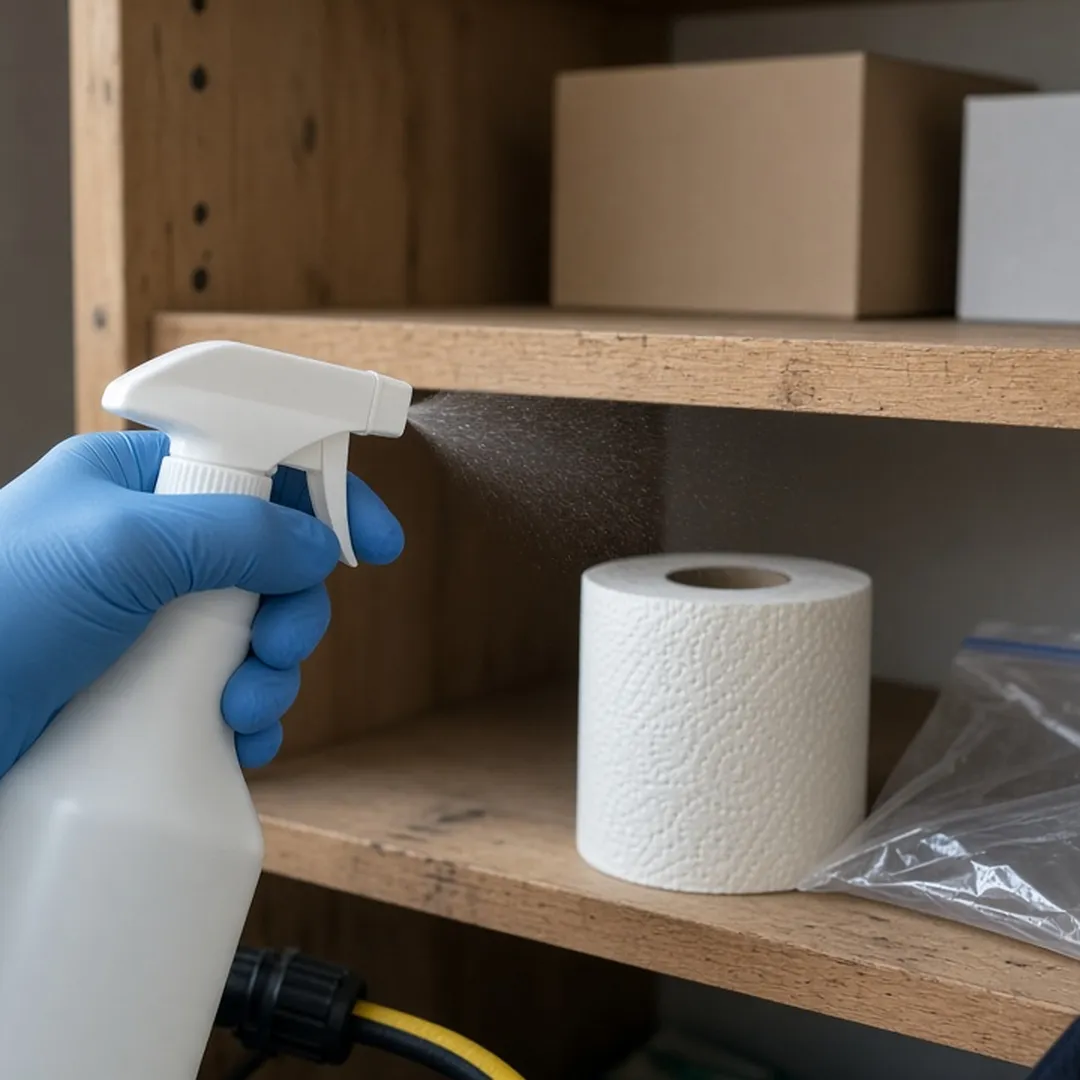
- Spray droppings, urine, and nesting material until very wet with an EPA-registered disinfectant or a mix of 1.5 cups of household bleach in 1 gallon of water.
- Let it soak for 5 minutes, or as long as the disinfectant label says.
- Wipe it up with paper towels and throw them in a covered garbage can.
- Mop or sponge the area with disinfectant and clean all hard surfaces, then wash gloved hands, remove the gloves, and wash bare hands with soap and warm water.
The CDC also says not to sweep or vacuum droppings, urine, or nests.
Why DIY Breaks Down in a Hoarded Home
DIY rodent cleanup breaks down in a hoarded home because the steps assume you can see and reach the droppings. In a hoard, droppings sit inside boxes, under papers, in clothing piles, and in the walls of the stacks themselves. Every item moved can shake loose dried material that hasn't been wetted yet. A crew works section by section, wetting each layer before it's moved, bagging it in sealed liners, and disinfecting the surfaces as they're uncovered.
What the County Does and Doesn't Do
The county inspects outside and leaves the inside to you. The Santa Clara County Vector Control District offers free exterior rodent inspections only and does not trap, clean up after rodents, inspect indoors, or enter attics and crawl spaces. Palo Alto residents request inspections at (408) 918-4770. The San Mateo County Mosquito and Vector Control District, which covers East Palo Alto, Menlo Park, and Redwood City, also inspects exteriors and does not trap or bait homes. Its San Mateo County line is 650-344-8592. The cleanup inside falls to the household or a private company.
Frequently Asked Questions
Can you get hantavirus from old mouse droppings?
Yes. Hantavirus spreads when dried urine, saliva, or droppings from infected rodents get stirred into the air and breathed in, and old, dry droppings are the material that turns to dust. The California Department of Public Health names the deer mouse as the carrier in California. Wetting droppings with disinfectant before touching them keeps the dust down, which is why sweeping and vacuuming are off the table.
Should I wear a mask to clean mouse droppings?
For a heavy infestation, yes. Gloves and wetting the droppings are the CDC's steps for a light cleanup. For heavy rodent infestations, the CDC calls for personal protective equipment that includes a half-mask air-purifying respirator with a HEPA filter, and it says to follow fit-testing requirements before using one. Droppings spread through boxes and piles across several rooms put a hoarded house in that heavy category.
Can I vacuum mouse droppings with a HEPA vacuum?
No, not as a first step. The CDC says not to vacuum or sweep rodent urine, droppings, or nesting materials, because it can put virus particles in the air. Droppings get soaked with a bleach solution or disinfectant for at least 5 minutes, then wiped up with paper towels and bagged. Vacuuming of dust and debris comes later, after the contaminated material is wetted and removed.
How do I know if a hoarded house has rodents?
Signs of rodents in a hoarded house include droppings in drawers, cupboards, and along walls, chewed packaging and paper, shredded nesting material, a musty urine smell, scratching sounds in walls or ceilings, and grease marks along baseboards. In a hoard, the signs may only show up on the edges of the piles. Assume droppings are inside the stacks if you see any on the surface.
Will pest control clean up droppings after trapping?
Pest control work covers trapping or baiting rodents and sealing entry points. The cleanup of droppings, urine, nests, and soiled materials is separate work. The county vector control districts in Santa Clara and San Mateo counties do not clean up after rodents either. In a hoarded home, the rodents get handled first, then a cleanup crew removes the contamination.
Get a Free Estimate in Palo Alto
If a hoarded house has droppings in the piles, call 123-456-7890 for a free walkthrough before anyone starts moving things. See our biohazard hoarding cleanup work, or how we handle Palo Alto hoarding cleanup.