
The 5 Levels of Hoarding and What Each One Needs

Last updated: October 14, 2026

The Clutter-Hoarding Scale, published by the Institute for Challenging Disorganization, rates hoarded homes on five levels from Level I (Green, Low) to Level V (Red, Severe). The scale is the common language families, social workers, and cleanup crews use to describe the same home the same way. This guide explains what each level looks like, the specific hazards it brings, and what cleaning it actually takes.

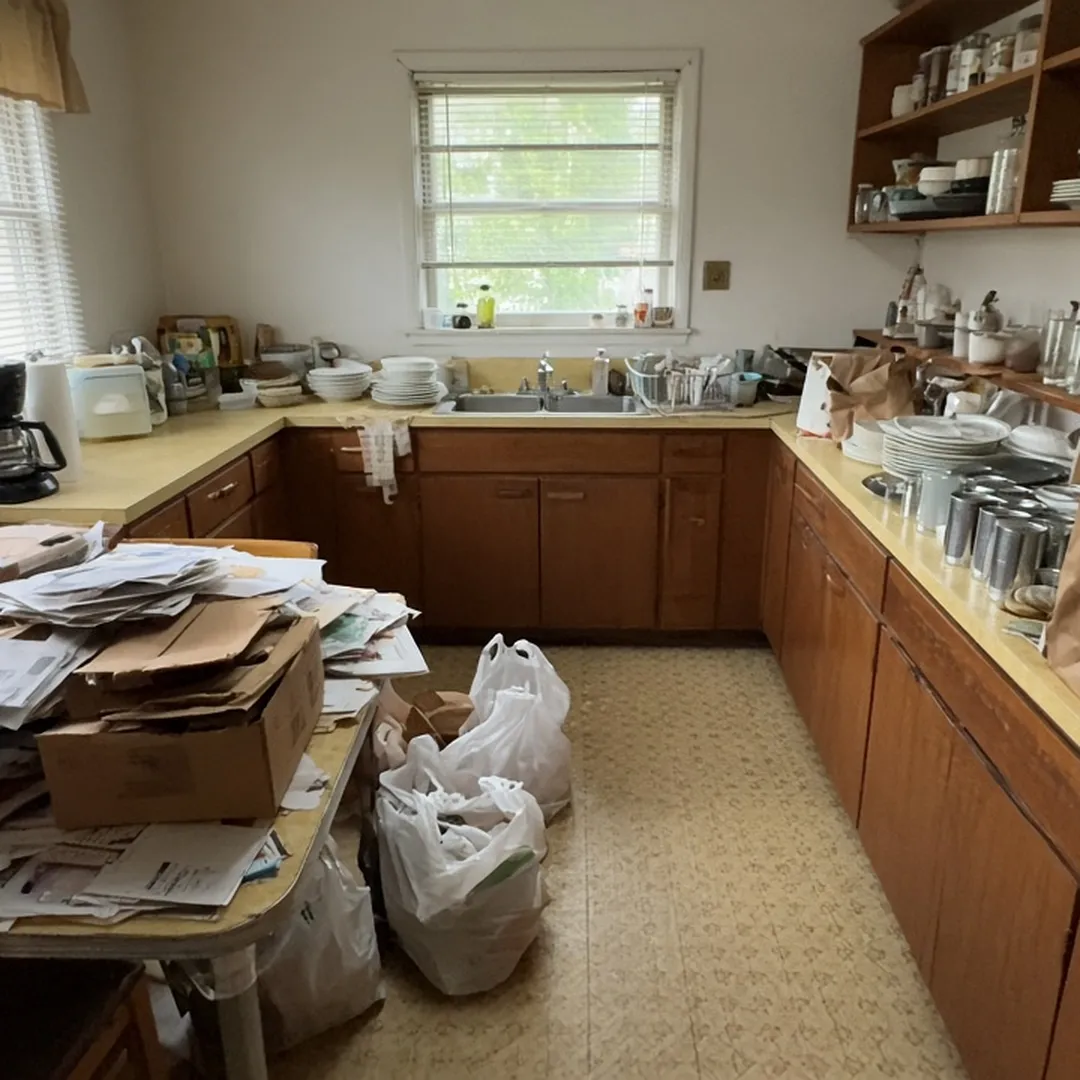
Cluttered kitchen showing a mid-level hoarding condition

The Five Levels at a Glance

Level Color Signs Who cleans it
I Green Exits clear, systems work, no pests, no odor Family or junk removal
II Blue One exit blocked, light pests, mild odor, some pet waste Family with plan, or junk removal
III Yellow Audible pests, soiled kitchen/bath, overflowing garbage, clutter at exits Professional cleanup crew
IV Orange Rodents in attic/basement, mold, rotting food, water damage, blocked exits Biohazard cleanup crew
V Red Pervasive vermin, human waste, failed plumbing/electrical, hazardous air Professional biohazard crew; residents need temporary housing

Level I: Low (Green)

What it looks like

A Level I home is functional and livable, though cluttered. All exits are clear, smoke and CO detectors are installed and working, appliances function, and there is no sign of pests or lasting odors. Clutter fills shelves and counters but stays manageable.

Signs it's still Level I

  • All doors, hallways, and stairs are clear
  • Kitchen and bathrooms are sanitary and usable
  • No pest activity and no lingering smells
  • No pet waste on floors or furniture

Who cleans it

Sorting and decluttering at Level I is a family project. Bags and bins, a rented truck, and a few weekends are enough. No protective gear, no disinfection, no professional crew required.


Level II: Guarded (Blue)

What it looks like

One major exit is blocked or hard to use. Some appliances have failed or are hard to reach. Light pest activity shows up — a mouse trap that keeps catching, insect activity in the kitchen — and mild odors are present. Visible pet waste shows up in one or two areas.

Signs it has reached Level II

  • One exit (a door or window) blocked by clutter
  • Light pest activity such as a few mouse sightings or insect traps
  • Mild, persistent odors
  • Visible pet waste in one or two spots
  • Some appliances not working

Who cleans it

A Level II home can still be cleared by family, though a professional organizer or junk removal company helps move it faster. Pest control is worth bringing in. No biohazard gear is needed unless waste areas are more than a few spots.


Level III: Elevated (Yellow) — The Pivot Point

What it looks like

The Institute for Challenging Disorganization treats Level III as the pivot point where a cluttered home becomes a hoarded one. At this level, the home's hazards — pests, waste, air quality — make it unsafe to clean without protective equipment and proper technique.

Signs it has reached Level III

  • Pests can be heard in walls, cabinets, or attic
  • Garbage overflows indoors or accumulates outside
  • Kitchen surfaces are heavily soiled and hard to sanitize
  • Toilets or sinks are soiled enough to be unusable or barely functional
  • HVAC has been down for a season or more
  • Clutter blocks or crowds at least one exit
  • Outdoor clutter (yard, porch, vehicles) is visible from the street

Who cleans it and how

A Level III home needs a professional cleanup crew, not junk removal. The order of the work matters. Contaminated areas get ventilated, wetted with disinfectant, and bagged before anything is moved — because sweeping or vacuuming rodent droppings puts hantavirus-carrying particles into the air. The crew sorts by your rules, hauls the discard, and disinfects the floors and surfaces underneath.

If the home has droppings throughout the piles, see rodent droppings cleanup in Palo Alto for how that specific work gets handled.


Level IV: High (Orange)

What it looks like

Level IV brings active rodent infestations in the attic or basement, visible mold on walls or ceilings, rotting food in the kitchen and in the piles, water damage or sewer odor, and exits that are blocked or inaccessible. The home is no longer safe to stay in for extended periods.

Signs it has reached Level IV

  • Rodents in the attic or basement (droppings, nesting material, gnawed structure)
  • Mold visible on walls, ceilings, or stored items
  • Rotting food in the kitchen and throughout the piles
  • Water damage from a leaking roof, pipe, or failed appliance
  • Sewer odor from a backed-up drain or failed toilet
  • Multiple exits blocked
  • Hazardous items — chemicals, batteries, old medications — mixed into the piles

Who cleans it and how

Level IV requires a biohazard hoarding cleanup crew with full protective equipment. The team ventilates, wets down all contaminated areas with disinfectant, and bags separately. Flooring soaked with urine or water damage, and drywall with mold, comes out. The rodent entry points get sealed. Disposal of hazardous items — paint, chemicals, medications — is planned separately.


Level V: Severe (Red)

What it looks like

Level V is the most dangerous condition on the scale. The home has pervasive vermin, human waste throughout the living areas, failed plumbing or electrical systems, air the scale rates as hazardous, and hazards hidden inside the piles. People living in a Level V home need temporary housing during the cleanup.

Signs it has reached Level V

  • Human waste in buckets, bags, bottles, or on floors
  • Pervasive vermin — mice, rats, cockroaches — throughout the home
  • Failed or non-functional plumbing or water supply
  • Unreliable electrical service (exposed wiring, tripped breakers, frequent outages)
  • Hazardous materials mixed into the piles (chemicals, sharps, biological waste)
  • Mold throughout the home
  • Blocked exits in every part of the house

Who cleans it and how

Level V is a full biohazard remediation. Residents need to leave for the duration of the work. The crew works in full PPE, ventilates each room before entry, wets down all waste and biological contamination, bags contaminated material separately, removes soaked flooring and mold-damaged drywall, and disinfects the structure down to the substrate. All plumbing and electrical issues are assessed before the structure is cleared.

California Health and Safety Code section 118321.1 requires companies removing blood or body fluids from a trauma scene to register with the California Department of Public Health as trauma scene waste management practitioners. The department publishes the list of registered practitioners online.


If the Home Is in the Bay Area

If a home in Palo Alto or a nearby city is at Level III or above, call 650-587-4811 to connect with a local provider for a walkthrough and a written scope. A qualified provider walks through the home, identifies the level and the specific hazards, and gives you the work and the order of the rooms in writing before anything starts.


Frequently Asked Questions

What is a Level 3 hoarder house?

A Level 3 hoarder house is one where clutter has started to affect health and safety. At Level 3, mice or insects can be heard in the walls, the kitchen and bathroom are dirty enough to be unsanitary, garbage spills past its cans, and piles creep toward the doors. Heating or cooling may have been broken for a season. The scale's authors treat this as the point where a cluttered home becomes a hoarded environment.

What is the worst level of hoarding?

Level V, labeled Red and Severe, is the worst level on the Clutter-Hoarding Scale. A Level V home has pervasive vermin and heavy infestation, human waste, rotting food, pervasive mold, failed water or sewer systems, unreliable electricity, blocked exits, and hazards hidden by clutter. A Level V home needs professional biohazard cleanup, and the people living there need somewhere safe to stay during the work.

Who created the Clutter-Hoarding Scale?

The Institute for Challenging Disorganization publishes the Clutter-Hoarding Scale and updates it, with its most recent quick version dated March 2026. The scale rates a home on structure, pests and animals, sanitation, and safety. Each home gets one of five color-coded levels, from Green at Level I to Red at Level V, so families and cleanup crews can describe the same home the same way.

Can a hoarded home go down a level after cleanup?

Yes. A professional cleanup takes a home from its current level back to Level I by removing the clutter, the contamination, and the damaged materials. Keeping it there takes ongoing support for the person living in the home, which can include family help, a professional organizer, and mental health care. A cleanup addresses the house, and the support addresses what led to it.

How do I know what level my parent's home is?

Walk through the home and compare it with the scale's signs for exits, appliances, pests, odors, kitchen and bathroom condition, and mold. If you see audible pests, overflowing garbage, or heavily soiled toilets, the home is at least Level III. Rodents in the attic, rotting food, or visible mold put it at Level IV. A professional walkthrough confirms the level and the work it needs.

Does Level III always need a professional?

Yes. At Level III, pests are audible and active, the kitchen and bathroom are unsanitary, and garbage is overflowing. Cleaning without protective gear in these conditions risks exposure to hantavirus from rodent droppings, bacteria from human or pet waste, and mold spores. The CDC advises against sweeping or vacuuming rodent droppings for exactly this reason. A professional crew has the equipment, the technique, and the disposal protocols to do it safely.

Call Now

If a home is at Level III or above, call 650-587-4811 to connect with a local provider for a walkthrough and a written scope. Read about biohazard hoarding cleanup, or see how a hoarder clean out in Palo Alto works.

Call 650-587-4811
Call 650-587-4811 Call Now